Mental Health
October 2, 20268 min read
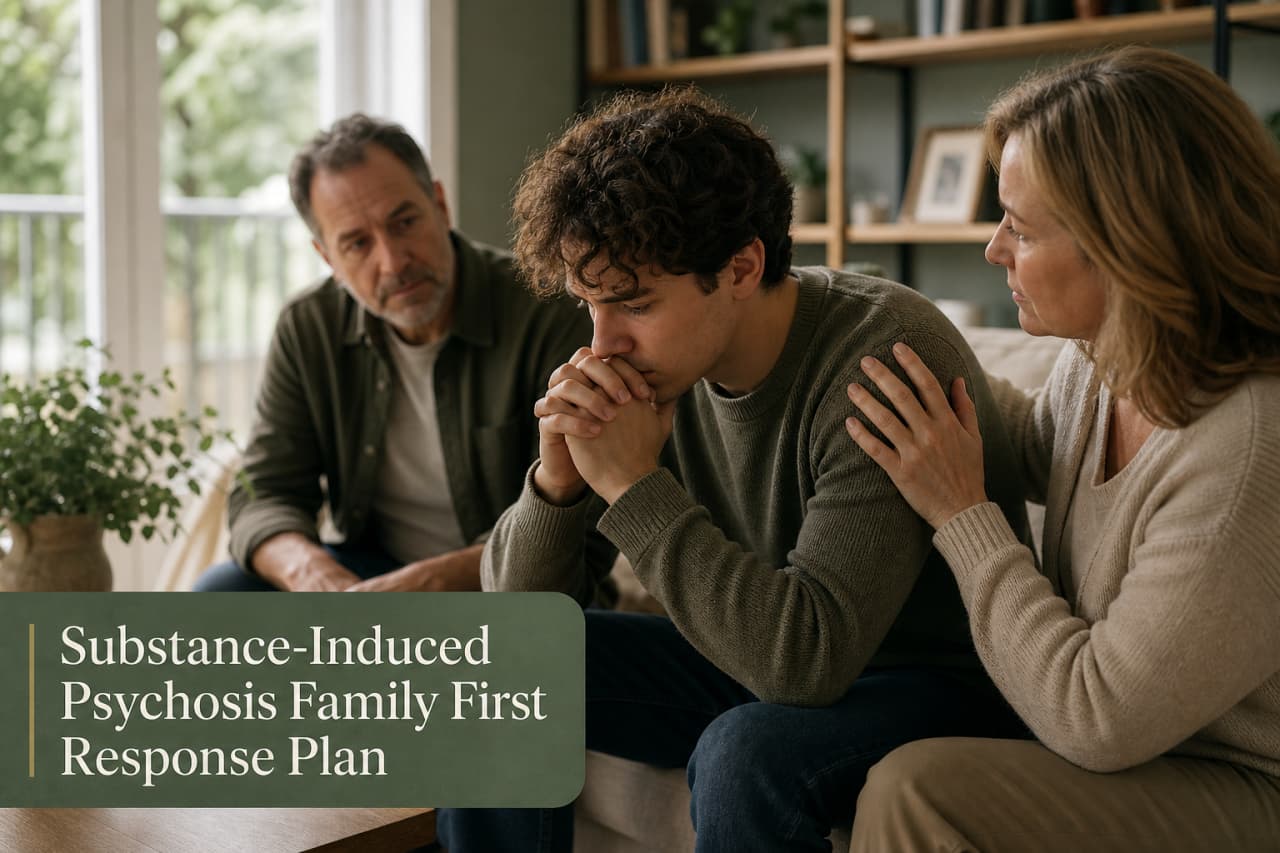
Substance-Induced Psychosis Family First Response Plan
Use a 911-first response for immediate danger, then move from medical stabilization to professional crisis and intervention planning.
DGC
David Gates, CIPFamilies often spend enormous energy getting someone into treatment.
David Gates, CIP
Lead Interventionist

Families often spend enormous energy getting someone into treatment.
Families often spend enormous energy getting someone into treatment. They compare programs, arrange travel, manage the crisis that led to admission, and try to understand what will happen during care. When discharge approaches, everyone may feel relieved enough to assume the hardest part has passed. That is exactly when a new set of questions becomes important.
The first question should be what professional care will look like after discharge. Depending on the person's needs, the plan could include individual therapy, psychiatric appointments, medication management, support groups, family therapy, or a virtual IOP in California, New Mexico, or Washington for someone who needs more structure while living at home. Families do not need to choose the level of care themselves, but they should understand what has been recommended and why. Knowing the schedule makes it easier to plan work, transportation, childcare, and household responsibilities around continued treatment.
It is also useful to know what happens if the recommended plan turns out not to be enough. Symptoms can change after someone leaves a structured setting, and a person who seemed stable at discharge may struggle once ordinary stress returns. Families should know who to contact with concerns and what signs would indicate the need for a higher level of care. A good plan includes the next step as well as a backup plan.
Families often leave treatment unsure how closely they should watch the person. Too little attention can mean missing important warning signs, while constant surveillance can damage trust and create conflict. Treatment teams can help identify symptoms or behaviors that genuinely deserve concern. Those signs may differ depending on whether the person is recovering from addiction, depression, trauma, a mood disorder, or several overlapping conditions.
Relatives should also understand the difference between an uncomfortable day and a clinical emergency. Irritability, fatigue, or wanting some privacy may be normal during a difficult transition, while suicidal thinking, severe intoxication, psychosis, dangerous withdrawal symptoms, or other acute changes require prompt professional attention. Knowing the difference reduces panic and hesitation. Families respond more effectively when they have a clear framework instead of trying to interpret every mood change.
Discharge often raises practical questions that families avoided during the crisis. Will the person be living at home? Will family members provide money or transportation? What happens if substances are brought into the house? What responsibilities is the person expected to resume, and which should be delayed while recovery stabilizes?
Boundaries work best when they are specific and communicated before conflict occurs. “You need to be responsible” is vague, while expectations around finances, substance use in the home, appointments, or household responsibilities can be stated clearly. Families should avoid using boundaries as threats or punishment. Their purpose is to define what relatives will and will not participate in while creating a safer environment for everyone.
Treatment changes more than the patient's behavior. Families may have developed habits of checking, covering, rescuing, lending money, making excuses, managing consequences, or trying to control the person's choices. Some of those behaviors may have developed out of love and fear, but they can become unsustainable. Discharge is a useful time to decide which patterns the family should leave behind.
This can be surprisingly difficult when relatives have been in crisis mode for years. Stepping back may feel like abandonment, especially if the family is accustomed to preventing every negative consequence. Professional family support can help clarify the difference between assistance and over functioning. Recovery becomes healthier when one person is not expected to change while the entire family system remains exactly the same.
A discharge plan should eventually become a real schedule. Families can ask about sleep, work, school, appointments, transportation, medication, meals, exercise, recovery meetings, therapy, and unstructured time. The goal is not to micromanage every hour. It is to make sure the transition from a highly structured program to ordinary life is not unnecessarily abrupt.
Unstructured time deserves particular attention. Someone who was accustomed to spending evenings drinking, using substances, isolating, or engaging in other unhealthy coping patterns may suddenly have several empty hours each day. New routines can provide alternatives before boredom, loneliness, or stress takes over. Those routines do not need to be exciting; consistency itself can be stabilizing.
About the Author

David Allen Gates is a Certified Intervention Professional (CIP) and founder of Addiction Interventions. He has personally led more than 1,500 family interventions nationwide.
Full bioUse a 911-first response for immediate danger, then move from medical stabilization to professional crisis and intervention planning.
Anxiety-driven avoidance becomes a family crisis when daily function collapses. Here is what accommodation looks like and how a professional intervention works.
Families can assess risk, prepare a depression intervention, handle refusal, and move a loved one toward clinical care with a clear plan.

Learn how to compare mental health treatment options by evaluating credentials, care levels, staffing, family involvement, costs, and aftercare.

Substance use is not required for a mental health intervention. A structured family meeting can fit better than a direct therapy referral when refusal blocks care.

Learn how telehealth is transforming addiction and mental health treatment through virtual programs, specialized care, and ongoing support.
If this article resonated with your situation, a certified interventionist can help you understand your options — confidentially, with no pressure and no cost for the first call.