
Intervention
September 11, 20267 min read
How Long to Plan an Intervention and When to Move Faster
Most professional interventions take 3 to 7 days to plan. Immediate danger calls for the crisis path, starting with 911 or 988.
DGC
David Gates, CIPUse a 911-first response for immediate danger, then move from medical stabilization to professional crisis and intervention planning.
David Gates, CIP
Lead Interventionist
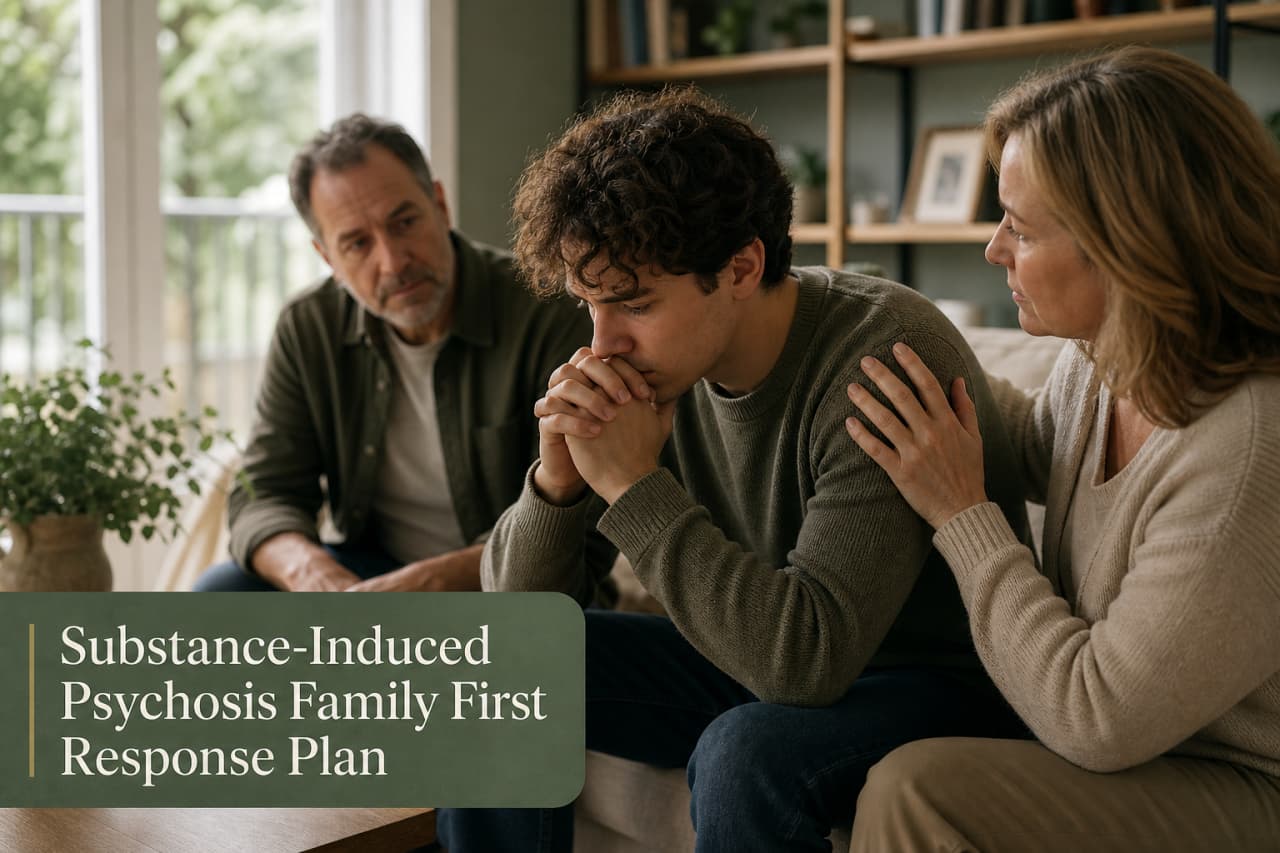
Use a 911-first response for immediate danger, then move from medical stabilization to professional crisis and intervention planning.
If a person is hallucinating, severely paranoid, threatening harm, hard to wake, having a seizure, or unable to breathe normally, call 911. A substance induced psychosis family crisis needs emergency medical assessment before any intervention talk. Keep your distance if safety is uncertain, cut the noise, and tell dispatch what substances may be involved.
Psychosis can mean hallucinations, fixed false beliefs, severe suspicion, confused speech, or behavior cut off from reality. Intoxication, withdrawal, and medication effects can produce these symptoms. So can medical and psychiatric conditions a family cannot identify at home.
Addiction Interventions answers crisis calls 24/7. Immediate threats and possible medical emergencies still belong with 911 and emergency clinicians.
Call 911 if any of these conditions are present.
Tell the dispatcher this may be a behavioral health and substance-related emergency. Describe what the person is doing rather than relying on a label. Report any weapon, known substance, breathing problem, seizure, threat, or injury.
If there is no immediate physical danger, you can call or text 988 for crisis support. The 988 Suicide & Crisis Lifeline supports people in mental health, suicide, and substance use crises. A suspected overdose or immediate threat still requires 911.
Use the emergency system first.
Keep the room quiet and give the person physical space. One calm speaker beats several relatives asking questions at once. Use short statements such as, “You seem frightened. Help is coming.”
Do not argue about whether a hallucination or belief is real. Direct challenges can raise fear because the experience feels real to the person. Acknowledge the fear without agreeing with the belief.
Move children, older adults, and pets to another location if you can do so safely. Remove weapons only when they are not being held or guarded. Never reach for an object in the person's hand. Keep an open path to the exit. Avoid crowding, touching, or cornering them.
Do not drive an agitated or severely paranoid person to the hospital yourself. A car is a confined space, and sudden behavior could endanger everyone inside. Wait for trained responders unless dispatch gives different instructions.
Avoid giving alcohol, drugs, supplements, or someone else's medication to calm the person. Do not physically restrain them. If your safety changes, leave the immediate area and update 911.
Our certified interventionists travel nationwide across all 50 states for in-home and facility-based work. That professional path begins after emergency clinicians address immediate medical and safety concerns.
Don't debate the delusion.
A factual timeline gives clinicians more value than a family diagnosis. Write down what changed, when it changed, and what the person may have taken.
Bring labeled containers, medication lists, or photos of packaging when this can be done without handling an unknown substance. Say “unknown” when you do not know. Guessing can send the medical assessment in the wrong direction.
The Mayo Clinic overview of psychosis describes hallucinations and delusions as core symptoms. Their presence does not reveal the cause. A clinician must consider substance exposure, medication effects, physical illness, and primary psychiatric conditions.
Withdrawal also matters. The National Institute on Alcohol Abuse and Alcoholism explains that alcohol withdrawal can require medical management. Families should not attempt to diagnose or manage severe withdrawal at home.
After emergency stabilization, a free and confidential consultation can help you organize the next decisions. You speak directly with the co-founders rather than a centralized call center.
Write it down.
Do not stage a family-led addiction intervention while the person is actively psychotic. Severe paranoia, hallucinations, or disorganized thinking can block them from processing letters, boundaries, and treatment choices. The conversation may also raise fear or agitation.
Emergency evaluation comes first. Clinicians can assess injuries, intoxication, withdrawal, medication effects, and psychiatric symptoms. They can also determine the immediate level of care.
A discharge from the emergency department does not mean every risk has ended. Follow the written discharge instructions, keep the follow-up appointment, and return for emergency care if dangerous symptoms return. Ask which symptoms require 911 and who should receive the medical records.
Once the person can take part in a structured conversation, an intervention may become appropriate. Addiction Interventions is Joint Commission Accredited. Our certified specialists use calm, planned work rather than a surprise confrontation built around shame.
Stabilization changes the next decision.
Call a professional intervention team after emergency clinicians address immediate danger. Addiction Interventions uses four phases to move a family from uncertainty toward a prepared treatment conversation.
This sequence matters when substance use and mental health symptoms appear together. A person may need care that can address both concerns. Sending them to a program that treats only one side of the problem can leave the care plan incomplete.
No professional can promise that a person will accept treatment or remain in recovery. Ask how the provider prepares the family, handles treatment admission, and supports you after the intervention.
Review intervention costs and insurance questions before agreeing to services. Ask for fees in writing. Clarify which charges belong to intervention work, medical care, and treatment admission. Insurance coverage can differ across those services.
Family preparation starts with boundaries you can carry out. A boundary describes your action. It does not attempt to control another adult through threats.
For example, a family might stop providing cash while offering to pay a treatment provider directly. Another boundary may limit access to a vehicle after impaired driving. The right boundary depends on the safety risks, finances, living arrangement, and treatment plan.
Consistency matters. If one relative sets a limit while another quietly removes it, the person receives two messages. Professional coaching helps the family spot that split before the intervention.
Our plans are built around the person and family. Lead Interventionist David Allen Gates has directed addiction treatment programs for more than two decades and has personally led more than 1,500 interventions. He is trained in the ARISE method, Johnson Model, and Family Systems Intervention.
Clinical Director Jennifer Miela-McDaniel began working as a drug and alcohol counselor in 1993. She is a trauma specialist trained in five intervention models, including the invitational and non-confrontational ARISE approach. Her work treats the intervention as a chance to interrupt destructive family patterns and open the door to care.
Preparation changes the conversation.
Our team takes crisis calls 24/7 and works with families across all 50 states. These are common questions families ask before medical evaluation or professional intervention planning.
The duration varies by substance, exposure, withdrawal, physical health, and other psychiatric symptoms. Some symptoms may improve as an intoxicating substance leaves the body. Others can continue and require treatment. Do not wait for psychosis to pass when safety is uncertain.
A family usually cannot determine the cause from symptoms alone. Intoxication, withdrawal, delirium, medication effects, sleep loss, and primary psychiatric conditions can look similar. Give clinicians a timeline and let them assess the cause.
Call 911 for immediate danger, severe medical symptoms, a suspected overdose, or behavior that makes basic safety impossible. Call or text 988 for crisis support when there is no immediate physical threat. If the situation becomes dangerous, move to 911.
Professional intervention may be appropriate once the person is medically stable enough to participate. Our team can prepare the family, lead the conversation, coordinate placement, and support follow-through.
Coverage depends on the policy and the service being billed. Ask separately about professional intervention work, emergency medical care, and treatment admission. Get answers from both the provider and insurer before making a financial decision.
Yes. Our network of certified interventionists travels across all 50 states and provides in-home or facility-based interventions. The location and timing depend on medical stability, safety, and the intervention plan.
Call 949-776-7093 for a free and confidential consultation. Our team is available 24/7, and you will speak directly with the co-founders. Addiction Interventions is headquartered at 3822 Campus Dr #300-B, Newport Beach, CA 92660.
Contact Us at 949-776-7093. If someone faces immediate danger or a possible medical emergency, call 911 first.
About the Author

David Allen Gates is a Certified Intervention Professional (CIP) and founder of Addiction Interventions. He has personally led more than 1,500 family interventions nationwide.
Full bioIn This Article
Related Services
Tags
Ready to help your loved one?
Call NowMost professional interventions take 3 to 7 days to plan. Immediate danger calls for the crisis path, starting with 911 or 988.

Sequential care can leave one condition untreated while the other is addressed. Families can pursue coordinated addiction and mental health treatment instead.
See the timeline from the first confidential call through family preparation, the intervention meeting, placement, and treatment admission.
Anxiety-driven avoidance becomes a family crisis when daily function collapses. Here is what accommodation looks like and how a professional intervention works.
Families can assess risk, prepare a depression intervention, handle refusal, and move a loved one toward clinical care with a clear plan.

After an eating disorder intervention, private residential treatment can offer privacy, medical support, and distance from daily triggers.

If this article resonated with your situation, a certified interventionist can help you understand your options — confidentially, with no pressure and no cost for the first call.