
Intervention
September 11, 20267 min read
How Long to Plan an Intervention and When to Move Faster
Most professional interventions take 3 to 7 days to plan. Immediate danger calls for the crisis path, starting with 911 or 988.
DGC
David Gates, CIPA practical screening list for comparing national intervention providers on credentials, safety, fees, treatment placement, and follow-through.
David Gates, CIP
Lead Interventionist
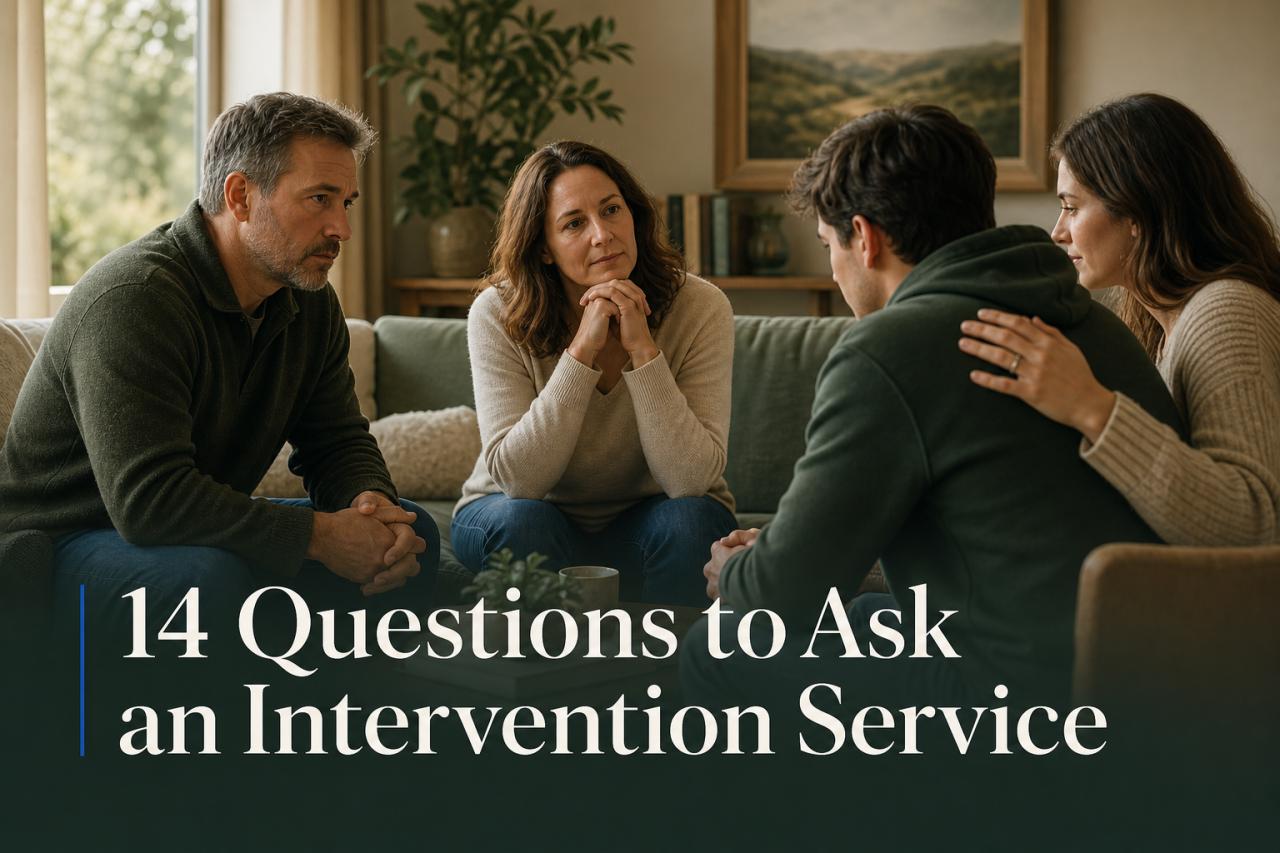
A practical screening list for comparing national intervention providers on credentials, safety, fees, treatment placement, and follow-through.
The questions to ask an intervention service should settle who will actually show up at your door, what that person is qualified to handle, how fees work, and what follow-through looks like once the meeting ends. A paid professional may enter your home after one phone call and guide a conversation that can decide whether your loved one accepts treatment, so get these answers before you sign anything or send a payment.
If someone may harm themselves or another person, has a medical emergency, or is in immediate danger, call 911. For suicide, mental health, or substance use crisis support, call or text 988. Use emergency services before arranging an intervention.
SAMHSA's guidance on the crisis line explains how the service connects people with trained crisis counselors. Ask any intervention company what it does when a case turns into an emergency, and expect a specific answer.
Ask for the name, qualifications, and specific role of the professional who will meet your family. Company branding matters less than the person in the room, because that person leads preparation, runs the conversation, and responds if behavior turns unexpected.
Get the interventionist's name before you sign whenever you can. Ask who prepares the family, who attends the meeting, and who coordinates the next step. If several people handle the case, request a written explanation of each role.
The Mayo Clinic's intervention overview describes intervention as a carefully planned process that often includes consultation with a qualified professional. That planning needs a clear point of contact.
Ask for the credential's full name, issuing body, current status, and scope. Then ask how many cases the interventionist has personally led that match your family's concern, such as alcohol use disorder, drug use, a mental health condition, dual diagnosis, gambling, an eating disorder, or an adolescent case.
Addiction Interventions publishes this information about its leaders. Lead Interventionist David Allen Gates is a Certified Intervention Professional and an Internationally Certified Alcohol and Drug Counselor. He has spent over 20 years directing addiction treatment programs and has personally led over 1,500 interventions.
You need one named contact before and after the meeting. Ask how you'll reach that person, what happens outside regular business hours, and who steps in if your primary contact becomes unavailable.
Calls to Addiction Interventions go directly to David rather than a centralized call center, so your family reaches a decision-maker from the first conversation.
A clear plan tells your family what to do before, during, and after the intervention. It should cover preparation, the method in use, safety concerns, treatment options, and the real chance that your loved one declines help.
Ask how many preparation conversations are included and what they cover. The provider should explain how it gathers family history, prepares written statements, identifies harmful patterns, and helps relatives set firm boundaries without cruelty.
Family preparation is the second phase of our four-phase process at Addiction Interventions. We coach families on what to say, what to expect, and how to hold boundaries. The other phases cover the confidential first call, the intervention itself, and ongoing support.
Ask the interventionist to name the model and explain why it fits your loved one's history and current condition. A model should guide the work, but it shouldn't replace judgment about your specific case.
Our interventionists lead with compassion and respect. David Gates is formally trained in the ARISE method, the Johnson Model, and Family Systems Intervention. We choose the structure based on the family and the person who needs help.
Ask what information the provider needs about recent substance use, medical risks, threats of harm, access to weapons, and current mental health symptoms. The answer should explain which cases the team accepts, when another professional is needed, and when emergency services take priority.
Addiction Interventions handles substance use, mental health, and dual diagnosis interventions, along with crisis, teen, executive, and family work. Suitability still depends on the facts of the case, which is why the first conversation covers immediate risks.
National availability should come with specific travel and communication terms. Ask where the interventionist is based, how travel is arranged, what expenses you'll pay, and how quickly the provider can confirm a realistic schedule.
Ask whether the named interventionist will travel to you or the company assigns someone based on geography. Confirm the meeting location, expected arrival date, travel expenses, lodging terms, and backup plan in writing.
Addiction Interventions serves families across all 50 states. Our certified interventionists travel to the client's location and can lead in-home or facility-based interventions. We're headquartered at 3822 Campus Dr #300-B, Newport Beach, CA 92660.
Separate phone availability from arrival timing. Ask when you can reach a qualified team member, how urgent cases are reviewed, and when the company can confirm travel and treatment arrangements.
Our team is available 24/7 to help families in crisis. The date of an intervention depends on family preparation, the specialist's travel, case safety, and treatment placement, so we set it after reviewing those facts with you.
Ask how the provider selects treatment options and how every charge is calculated. Your family needs enough detail to separate the intervention fee, travel expenses, and potential treatment costs.
Ask which clinical and practical factors shape a recommendation. Those may include the primary substance or mental health concern, co-occurring conditions, age, location, and the level of support needed. Request an explanation for each option presented.
Ask the intervention company to disclose any financial relationship with recommended treatment centers. You can compare its reasoning with SAMHSA's FindTreatment.gov and the NIAAA Alcohol Treatment Navigator, which provides questions for assessing alcohol treatment services.
Addiction Interventions coordinates treatment placement as part of its process. We weigh the facts of the case and stay involved with follow-through during treatment and after.
Request a written estimate that separates professional fees, travel, lodging, rescheduling, cancellation terms, and follow-up. Ask which expenses require advance payment and which could change after you sign the agreement.
Our first consultation is free and 100 percent confidential, with no commitment required. The professional intervention has separate costs, which your family should review before deciding.
Coverage depends on the insurance plan and the service provided. Ask the intervention company what billing documents or codes it can supply, then ask your insurer which charges qualify for reimbursement and what records it requires.
Treat intervention fees and treatment admission as separate coverage questions. An insurer may handle them differently, so request written benefit information instead of relying on a verbal assumption.
The provider should explain what happens after every possible response. That includes acceptance, delay, refusal, leaving the meeting, or agreeing and then changing course before admission.
Ask for a refusal plan before the meeting. It should cover family communication, boundaries, immediate safety concerns, and the provider's next contact with your family.
No intervention service controls another person's decision. A provider can prepare the family, lead the conversation, and create a clear route to care, but anyone who promises treatment acceptance or lasting recovery is overselling.
Ask who confirms admission, coordinates with the selected program, communicates with the family, and responds if the plan changes. Get the duration and scope of follow-up in writing.
Ongoing support is the fourth phase of our process at Addiction Interventions. We stay involved with treatment placement coordination and follow-through during treatment and beyond, while helping the family hold healthier boundaries.
Check company accreditation, the interventionist's credentials, public reviews, and any stated experience totals. If a provider shares a success rate, ask how it defines success, which cases it counted, and the period covered. Don't base your decision on an outcome guarantee.
Addiction Interventions is Joint Commission Accredited. We've helped over 1,500 families and hold a 5.0-star rating based on verified Google reviews. David Gates has personally led over 1,500 interventions, which counts his direct experience separately from the company's family total.
| Area | Write down | A clear answer includes |
|---|---|---|
| Interventionist | Name and direct role | Current credentials and relevant case experience |
| Method | Model and reason for choosing it | Family preparation and meeting structure |
| Safety | Emergency limits and refusal plan | Clear use of emergency services or other care when needed |
| Cost | Professional and travel charges | Payment, cancellation, and follow-up terms |
| Placement | Reasons for each recommendation | Disclosure of financial relationships |
| Aftercare | Named follow-up contact | Scope and duration of continued support |
The written agreement should identify the provider, services, fees, travel terms, cancellation policy, placement role, and follow-up. It should also explain what happens if the intervention is delayed or your loved one declines treatment.
No service can responsibly guarantee another person's decision or recovery. Ask what the team will do to prepare your family, present treatment, respond to refusal, and support boundaries after the meeting.
Timing depends on safety, family preparation, interventionist travel, and treatment availability. Addiction Interventions is available 24/7 and serves all 50 states, and the schedule is set after a review of your case.
Addiction Interventions offers mental health interventions for concerns such as depression, anxiety, and PTSD, along with dual diagnosis interventions. If there's immediate danger, use emergency services before arranging anything.
Our team listens to the situation, reviews immediate concerns, and explains available options without judgment or obligation. The consultation is free and 100 percent confidential, and you'll speak directly with David.
For a free and 100 percent confidential consultation, reach Addiction Interventions at 949-776-7093. Our certified interventionists travel nationwide for in-home and facility-based interventions. Bring your list and press for direct answers before you decide.
About the Author

David Allen Gates is a Certified Intervention Professional (CIP). He has personally led more than 1,500 family interventions nationwide.
Full bioIn This Article
Related Services
Tags
Ready to help your loved one?
Call NowMost professional interventions take 3 to 7 days to plan. Immediate danger calls for the crisis path, starting with 911 or 988.

Hidden debt and secrecy often push families to act before they have a plan. A gambling addiction intervention builds money boundaries into a structured family meeting.

Flight timing, family prep, cost drivers, and treatment admission all have to line up when an interventionist crosses state lines.

A family checklist for checking CIP credentials, financial independence, safety plans, fees, treatment referrals, and follow-up.

Adult siblings can agree on roles, set boundaries they'll keep, prepare a treatment option, and know what to do if their brother or sister says no.
A plan for adult children preparing an alcohol intervention, including family roles, letters, treatment options, boundaries, and refusal.


If this article resonated with your situation, a certified interventionist can help you understand your options — confidentially, with no pressure and no cost for the first call.