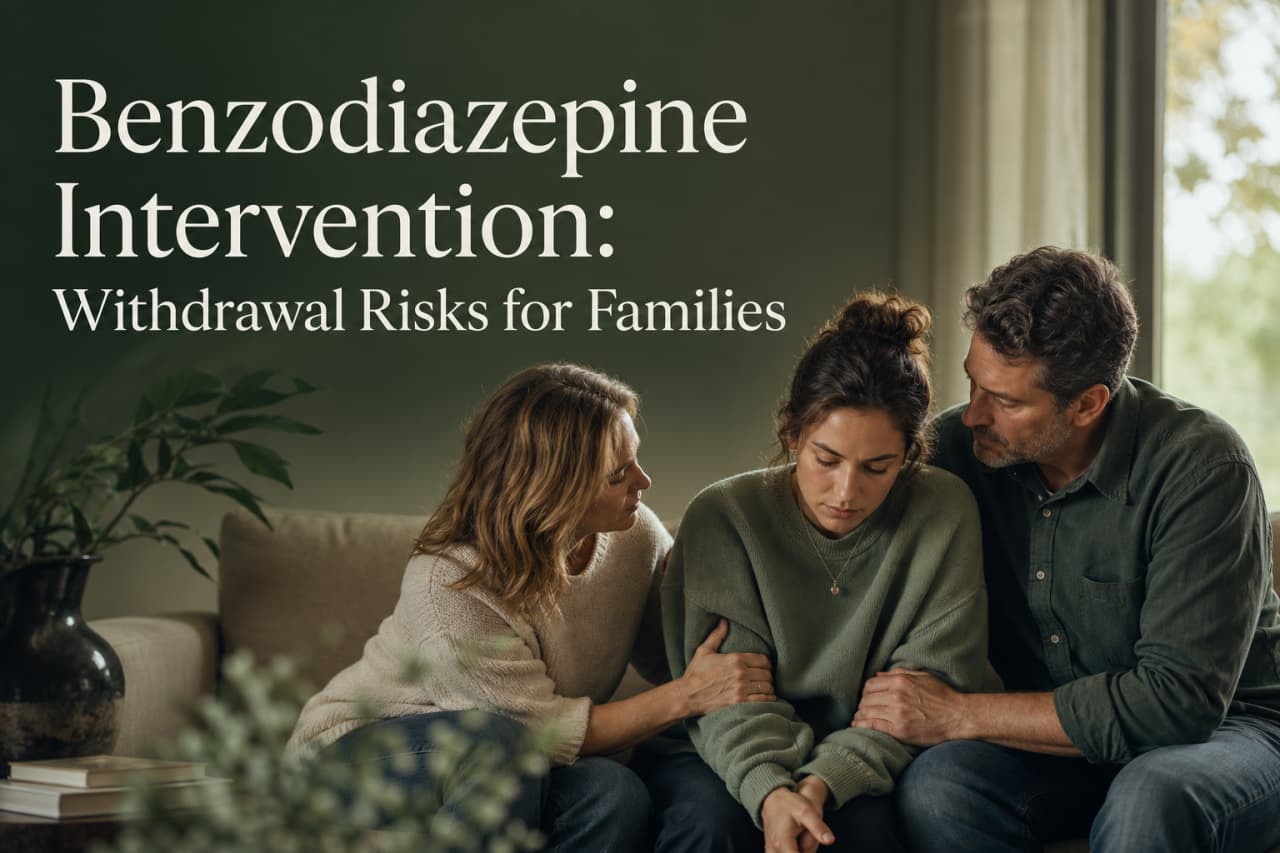
Stopping benzodiazepines cold after physical dependence has formed can set off seizures and other medical emergencies. A benzodiazepine intervention links a steady family conversation to prompt medical assessment and the right level of care. If someone is seizing, unresponsive, or struggling to breathe, call 911.
The FDA benzodiazepine safety communication states that physical dependence can develop even when these medications are taken as prescribed. Sudden stops or cuts that move too fast can produce withdrawal reactions. Families should not run a taper or force an immediate stop without medical direction.
Alcohol and other sedating drugs raise the stakes. The National Institute on Alcohol Abuse and Alcoholism notes that alcohol mixed with benzodiazepines can deepen sedation, impair coordination and memory, and increase overdose risk. Opioids add further breathing risk.
Withdrawal Danger Changes the Intervention Plan
The plan has to include a safe path into medical care. A promise to quit at home can create a fresh emergency. Before the family meeting, an interventionist needs a clear picture of what the person may be taking, how they take it, and which other substances could be in the mix.
During Addiction Interventions' free, confidential consultation, we ask about prescriptions, possible nonprescribed use, alcohol or opioid use, prior withdrawal symptoms, seizure history, and current mental health concerns. We are available 24/7. You speak with our co-founders, not a call center.
You may not have every answer. Report what you saw and keep it separate from secondhand claims. Medication bottles, pharmacy records, discharge papers, and notes from prescribers give the receiving clinical team something solid to work with.
Don't guess.
Never pressure someone who may be physically dependent on benzodiazepines to stop suddenly. A licensed medical professional should assess withdrawal risk and decide how medication changes are handled.
Dependence and Use Disorder Are Different
Physical dependence is the body adapting to a medication. It can form during prescribed use. A substance use disorder involves patterns such as loss of control, harmful use, or continued use despite serious harm. Only a qualified clinician can make that diagnosis.
That distinction shapes how you talk in the room. Accusations about motives pull the conversation off the facts. Stick to what you can point to: missed work, falls, memory problems, early refill requests, unsafe driving, or mixing the medication with alcohol, if those events actually happened.
A Mayo Clinic overview of prescription medication misuse lists confusion, drowsiness, unsteady walking, poor concentration, and slowed breathing among warning signs tied to anti-anxiety medicines and sedatives. One sign alone does not establish a disorder. A repeated pattern does warrant assessment.
Our Clinical Director and Lead Interventionist, Jennifer Miela-McDaniel, began working as a drug and alcohol counselor in 1993. She is a trauma specialist trained in five intervention models. Her family-focused approach keeps relatives on harmful behavior instead of turning the meeting into a fight over labels.
Prepare the Facts Before the Conversation
Write down what you know before you pick a meeting date. A factual record helps the interventionist judge urgency, ready the family, and line up a treatment provider that can evaluate withdrawal risk.
List known medication names, prescribed doses, prescribers, and pharmacies. Record recent changes in sleep, speech, memory, balance, work, or family responsibilities. Note alcohol, opioid, or other drug use without treating every report as proven. Flag prior seizures, severe withdrawal reactions, overdoses, hospital visits, or suicide threats. Decide who will attend, which boundaries each person can hold, and who can handle transportation.
Do not search rooms, seize medication, or threaten an abrupt cutoff as part of the intervention. If children or other household members could reach unsecured medication, ask a pharmacist or medical professional about safe storage that does not interrupt prescribed dosing.
Family preparation is the second phase of our intervention process. We coach you on what to say, what reactions to expect, and how to set firm, caring boundaries. Each plan is built around the prescription history, co-occurring mental health symptoms, and the specific family dynamics in play.
Preparation protects everyone.
Call 911 for a seizure, severe breathing trouble, suspected overdose, or inability to wake the person. Call or text 988 through the [988 Suicide & Crisis Lifeline](https://988lifeline.org/) if the person is experiencing a suicide or mental health crisis.
How We Plan a Benzodiazepine Intervention
We tie family preparation, the intervention meeting, and treatment placement into one plan. That cuts the odds of winning brief agreement with no provider ready to assess the person.
It starts with a free confidential call. We listen to what has happened, flag immediate concerns, and outline possible next steps with no commitment required. In family preparation, the interventionist helps participants write clear statements, choose firm boundaries, and brace for likely responses. At the structured intervention, a certified specialist leads a calm conversation aimed at accepting assessment and treatment. Then comes placement and follow-through. We coordinate the treatment handoff and stay involved during treatment and after.
Our certified interventionists travel across all 50 states. Meetings can take place in a home or a facility, depending on the plan. We use structure and direct language, with the aim of opening a path to care while treating the person with respect.
Lead Interventionist David Allen Gates is a Certified Intervention Professional and Internationally Certified Alcohol and Drug Counselor. He has over 20 years directing addiction treatment programs and has personally led over 1,500 interventions. He is trained in the ARISE method, the Johnson Model, and Family Systems Intervention.
Treatment acceptance cannot be promised. Professional planning still gives your family a clear message, a medically informed destination, and boundaries you can keep if the answer is no.
Treatment Placement Must Fit the Medical Risk
Clinical risk should drive the care setting. Convenience comes second. A qualified medical team may need to review the dose, how long the medication has been used, other substances, prior withdrawal history, physical health, and current mental health symptoms.
Some people need supervised withdrawal management before another level of treatment. Others receive a different medical plan. An interventionist should arrange access and transportation while leaving dosing and taper decisions to licensed medical professionals.
Co-occurring depression, anxiety, trauma symptoms, or opioid use can change placement needs. Addiction Interventions provides dual diagnosis interventions for families who need a response that addresses substance use and mental health together.
Our fourth phase covers treatment placement coordination and follow-through during treatment and beyond. We can also explain how intervention fees differ from treatment costs, without inventing a price or promising insurance coverage. SAMHSA's National Helpline is another federal resource for substance use treatment information.
The handoff matters.
What People Want to Know
Can benzodiazepine withdrawal be life-threatening?
Yes. Severe withdrawal can include seizures and other dangerous reactions. The risk depends on factors a medical professional must assess, including the medication, pattern of use, other substances, and withdrawal history. Do not attempt a home taper from general online instructions.
Should we take the medication away before an intervention?
No family member should force an abrupt stop or change the dose without medical direction. If you believe an overdose has occurred, call 911. For nonemergency concerns, contact the prescriber or a qualified medical provider and tell the interventionist what you observed.
Can someone become dependent while following a prescription?
Yes. Physical dependence can form during prescribed use. Dependence does not automatically mean a substance use disorder, but it does mean stopping may require medical planning. Concerning behavior or harm should be assessed on its own.
What happens if the person refuses treatment?
The interventionist helps the family state and hold the boundaries prepared before the meeting. Those boundaries might cover money, housing, transportation, or contact, depending on the facts. They need to be realistic, lawful, and enforceable by the person setting them.
Can Addiction Interventions travel to our family?
Yes. Our network of certified interventionists serves families across all 50 states. We provide in-home and facility-based interventions, and our team is available 24/7 for crisis calls.
Does insurance cover a benzodiazepine intervention?
Coverage depends on the policy and on whether the expense involves intervention services, medical withdrawal care, or ongoing treatment. Ask the insurer for written benefit details. Our free consultation can walk through the intervention process and the cost questions to raise before you choose a provider.
Speak With Our Team
If someone is seizing, unresponsive, or having trouble breathing, call 911. Use 988 for an immediate suicide or mental health crisis. For intervention planning, call Addiction Interventions at 949-776-7093 for a free, fully confidential consultation.
We are available 24/7 and serve families nationwide. You will speak directly with our co-founders. Our headquarters is at 3822 Campus Dr #300-B, Newport Beach, CA 92660.