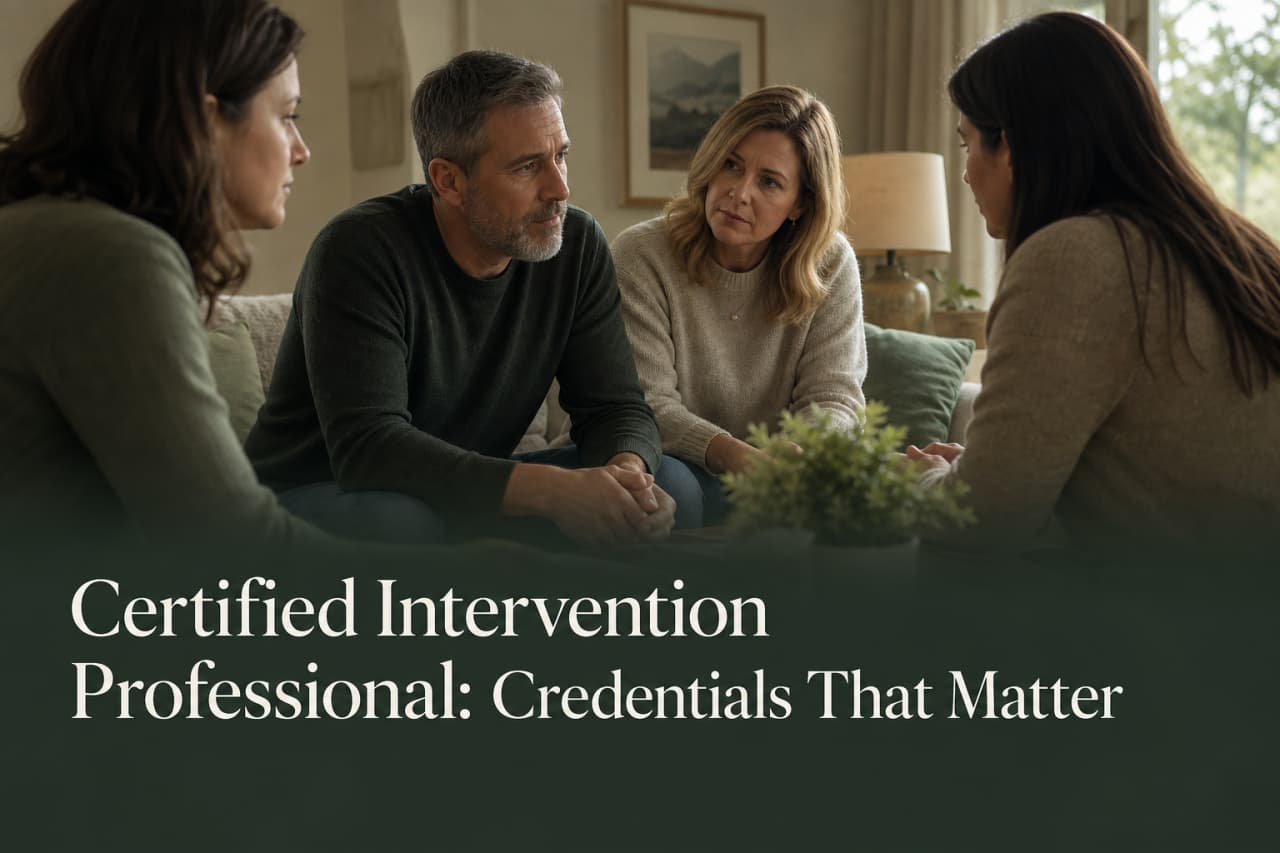
Six parts give each family statement its shape: care, one firsthand fact, impact, a treatment request, support, and a boundary. Families who plan what to say at an intervention before anyone sits down keep the meeting on track. Order matters. A trained facilitator sets the speaker order and holds the room to that plan.
Set the Talking Order Before Writing the Script
Put the calmest and most trusted speaker first. Rank the rest by steadiness, relevance, and ability to follow through. Family hierarchy has no place in this choice. A parent may open, but a sibling or close friend may be the stronger first voice when that relationship carries less heat. Addiction Interventions builds this order around the people involved, drawing on ARISE, the Johnson Model, and Family Systems Intervention.
The facilitator opens the meeting, states its purpose, and sets one rule. Each person speaks without interruption. The family then follows the sequence already agreed on.
The facilitator explains how the conversation will run. A trusted, steady person speaks next and sets a caring tone. People with recent firsthand examples follow. Family members ready to set firm boundaries speak after that. One representative summarizes the support on offer. The facilitator then presents the immediate treatment or assessment request.
Do not place the most charged relationship first. Early conflict drags the room into old arguments before the request is even heard. Anyone who cannot stay calm may speak later, send a written statement, or stay out of the room.
Our interventionists match the talking order to the family's relationships and the concern at hand so the script supports the plan rather than fighting it.
What to Say at an Intervention With Six Shared Parts
Give every speaker the same six-part framework, then cut repeated stories. During pre-intervention coaching, Addiction Interventions helps families decide what belongs in the room, what stays out, and which boundaries they can actually hold after the meeting.
Each statement covers the same six parts. Open with connection by naming your care and the relationship you want to protect. Add one firsthand fact you personally saw or heard. State the impact on you, the family, work, school, health, or safety. Ask your loved one to accept the arranged assessment or treatment plan. Name one recovery-focused action you are ready to take. Close with the boundary you will change if help is declined.
Keep facts observable. Dates, missed obligations, positive substance tests, financial events, and direct statements beat guesses about motive. Lead with “I saw,” “I heard,” or “I found.” Leave diagnostic labels to clinicians. Guesswork starts fights.
A substance use disorder is a medical condition, as explained by the National Institute on Alcohol Abuse and Alcoholism. Moral labels invite a fight about character. Specific events keep the talk tied to what happened.
Brevity helps. Long speeches lose the room.
Use Direct Lines Instead of Speeches
Read from a prepared page. Use plain language. Addiction Interventions leads with compassion and calm structure. Accusations, long histories, and demands for an apology pull focus off the treatment request.
A substance use intervention statement can follow this form.
I love you, and I want a healthier future with you. On [date], I personally saw [observable event]. It affected me or our family by [specific impact]. I'm asking you to accept the treatment plan arranged for today. I will support [specific recovery action]. If you decline, I will [boundary I can enforce].
A mental health intervention needs the same discipline, with an assessment request that fits the situation.
I care about you. Over [time period], I saw [specific change in sleep, eating, work, school, safety, or daily function]. The effect has been [specific impact]. I'm asking you to complete the professional assessment arranged for today. I can support [specific action]. If you decline, I will [boundary].
Cut words such as “always” and “never.” Skip secondhand stories unless the person who witnessed the event can verify them. Promises about what treatment will fix also have no place in the script.
The Mayo Clinic's intervention guidance stresses advance planning, a treatment plan, and careful team selection. Those steps keep the meeting from turning into an improvised family argument.
Make One Specific Treatment Request
Ask for one action that can happen that day. “Please get better” gives your loved one nothing concrete to decide. “Please accept the assessment and treatment plan arranged for today” is direct. Addiction Interventions coordinates that placement inside its four-phase process.
Name the next step, who will help, and when it begins. Confirm placement, intake, and transportation before the meeting.
Offer one primary plan and one clinically appropriate backup. Too many options create room to stall. The facilitator can answer practical questions while keeping the decision in front of the person.
Use this line: “The assessment and treatment arrangements are ready. We're asking you to accept this help today.”
Clarity cuts side debates. Acceptance still belongs to your loved one. No ethical interventionist can guarantee the outcome.
Prepare for Refusal Without Starting an Argument
Write responses to likely objections before the intervention. Addiction Interventions stays involved after the meeting and remains available 24/7, which helps families hold the plan when a loved one refuses, delays, or tries to renegotiate.
A facilitator can acknowledge the objection, repeat the request, and return to the decision. The family should not debate every detail or invent new concessions on the spot. Hold the line.
I hear that you disagree. The request remains the same. We can discuss clinical questions with the treatment team. My boundary will begin under the condition I described.
Boundaries describe your actions. Stopping direct cash payments, changing living arrangements, or limiting contact under defined conditions are examples. A threat tries to control another person. A boundary states what you will do.
Never announce a boundary you will not maintain. Boundaries that touch children, housing, employment, or shared finances may need advice from an attorney, clinician, or other qualified professional before the intervention.
Do not chase a person who walks out. Do not block a doorway, take a phone, or use physical restraint. The facilitator should pause the process and decide whether a safe second conversation is possible.
Bring in a Facilitator When Conflict Controls the Room
Professional facilitation fits when family members cannot agree on boundaries, prior conversations have already been refused, or safety and mental health concerns complicate the plan. The facilitator controls the order, interrupts blame, and returns the room to the prepared request.
Addiction Interventions is a Joint Commission Accredited family and crisis intervention company. Lead Interventionist David Allen Gates is a Certified Intervention Professional and Internationally Certified Alcohol and Drug Counselor with over 20 years of experience directing addiction treatment programs. He has personally led over 1,500 interventions.
Clinical Director Jennifer Miela-McDaniel began her counseling career in 1993. She is a trauma specialist trained in five intervention models and works with drug, alcohol, gambling, eating disorder, adolescent, and geriatric interventions.
Our certified interventionists travel across all 50 states for in-home and facility-based interventions. Callers speak directly with our co-founders. There is no centralized call center.
Stop the Script When Immediate Safety Takes Priority
Call 911 if someone is in immediate danger, has become violent, has a weapon, may have overdosed, or needs urgent medical care. Emergency responders take priority over a planned intervention.
Call or text 988 for a suicide, mental health, or substance use crisis that needs immediate crisis support in the United States. If you believe someone may act on a suicide plan or cause imminent harm, call 911.
The Substance Abuse and Mental Health Services Administration offers guidance for helping someone seek mental health or substance use care. Those resources can support a family conversation. Urgent threats still require emergency or crisis services.
Addiction Interventions is available 24/7 for families in crisis. Once immediate safety has been addressed, our team can help you decide whether a planned intervention is appropriate.
Questions Readers Ask
Our free and 100 percent confidential consultation gives families a place to discuss these questions with a co-founder before committing to an intervention.
How long should each person speak?
We recommend a statement that fits on one page and covers one firsthand example. Each speaker should add a distinct point. Repeating the same event makes the meeting longer without making the request clearer.
Can a family hold an intervention without a professional?
A family can hold a conversation on its own. We recommend professional facilitation when denial, conflict, prior refusal, mental health concerns, or uncertain boundaries are present. A certified interventionist can prepare the family and manage the talking order in real time.
What happens if our loved one refuses treatment?
The family states the prepared boundaries and follows through without punishment or debate. Addiction Interventions continues supporting families with placement coordination and follow-through during treatment and beyond.
Does the same script work for a mental health intervention?
The six-part structure still applies, but the observations, safety plan, and requested care must fit the mental health concern. Addiction Interventions provides mental health and dual diagnosis interventions for people who may need support for co-occurring conditions.
How much does a professional intervention cost?
Your free consultation is the place to ask about intervention cost and what the proposed service includes before you commit. The plan depends on the family's situation, location, preparation needs, and type of intervention. No price or outcome should be fixed before those details are reviewed.
Can an interventionist travel to our family?
Yes. Addiction Interventions serves families across all 50 states, with certified interventionists traveling for in-home and facility-based interventions.
Speak With Addiction Interventions
Call 949-776-7093 for a free and 100 percent confidential consultation. We are available 24/7, and you will speak directly with one of our co-founders about your family, the talking order, and the next appropriate step.
Addiction Interventions is headquartered at 3822 Campus Dr #300-B, Newport Beach, CA 92660, and serves families nationwide.