
Intervention
September 8, 20268 min read
Who Should Not Participate in an Intervention?
Use behavior-based criteria to decide who belongs in the room, who needs another role, and when safety requires a different response.
DGC
David Gates, CIPA Florida office does not prove intervention quality. Check credentials, planning, travel terms, and follow-through before you hire a traveling professional.
David Gates, CIP
Lead Interventionist
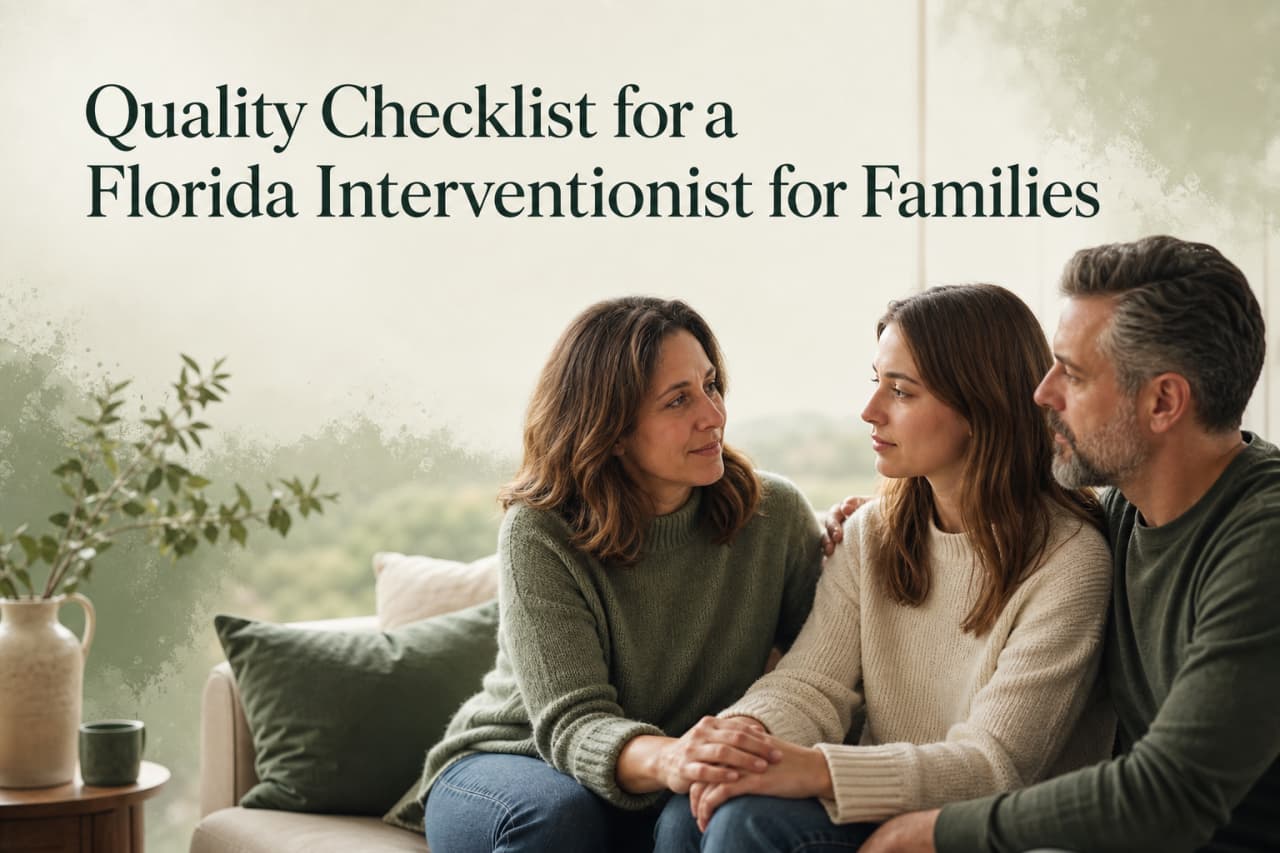
A Florida office does not prove intervention quality. Check credentials, planning, travel terms, and follow-through before you hire a traveling professional.
A Miami or Tampa address on a website proves coverage, not competence. Addiction Interventions sends certified specialists to families across all 50 states. Pick a Florida interventionist for families on credentials, preparation, fit, and follow-through. Office proximity ranks far below those four factors.
Use a location page only to confirm the company reaches your area. Then ask who will lead the meeting, which intervention model fits the case, how treatment placement is handled, what travel costs include, and what happens if your loved one refuses help. Those answers reveal quality faster than any map pin.
Verify the named professional before you evaluate the map. A page for Miami, Tampa, or Jacksonville establishes coverage. It gives you no proof of the interventionist's credentials, preparation process, or role after the meeting.
Addiction Interventions is a Joint Commission Accredited family and crisis intervention company. Lead Interventionist David Allen Gates is a Certified Intervention Professional and Internationally Certified Alcohol and Drug Counselor. He has over 20 years of experience directing nationally recognized addiction treatment programs and has personally led over 1,500 interventions.
Clinical Director and Lead Interventionist Jennifer Miela-McDaniel began her career as a drug and alcohol counselor in 1993. She is a trauma specialist trained in five intervention models, including the invitational and non-confrontational ARISE approach. Our company also holds a 5.0-star rating based on verified Google reviews.
During your free and confidential consultation, you speak directly with one of our co-founders rather than a centralized call center. Ask who would travel to Florida and why that person fits your family's case.
Get the assigned interventionist's name, credentials, and relevant case experience before you move forward. Ask which intervention model they recommend and why. Confirm the exact preparation your family will receive, plus the services, travel terms, and follow-up written into the agreement. Press for a clear plan that covers treatment acceptance, hesitation, or refusal.
Names matter.
A credible travel plan begins with family preparation. Booking flights first, then scrambling for history and boundaries, leaves too much to chance.
Our process has four phases. The first is a free confidential call. We listen without judgment and explain the available options. No commitment is required. Family preparation comes next. We coach you on what to say, what to expect, and how to set loving but firm boundaries.
The third phase is the intervention itself. A certified specialist leads a structured, calm conversation that opens the door to treatment. During the fourth phase, we coordinate treatment placement and stay involved during treatment and beyond.
Ask how much preparation is included, which family members should participate, and what information the specialist needs before arriving. Treatment acceptance cannot be guaranteed, so the plan should address several possible responses from your loved one.
Preparation is the work.
The person's substance use or mental health needs, family pattern, safety concerns, and willingness to talk should shape the method. A provider who runs the same script for every family is ignoring information that could change the plan.
Mayo Clinic's overview of intervention describes it as a carefully planned process that may involve family, friends, and a qualified professional. That planning matters. Anger, blame, and improvised demands pull the conversation away from treatment.
Our lead interventionists are trained in methods that include ARISE, the Johnson Model, and Family Systems Intervention. ARISE offers an invitational, non-confrontational approach. Family Systems Intervention examines patterns across the family and supports boundaries that can continue after the meeting.
The clinical concern also changes the treatment search. We handle interventions involving substance use disorders, depression, anxiety, PTSD, and co-occurring mental health and substance use conditions. For alcohol-related concerns, the NIAAA Alcohol Treatment Navigator provides an independent resource for evaluating treatment options.
Treatment placement should be discussed before the intervention occurs. If your loved one agrees to help, the family needs a defined next action. Another round of calls and uncertain decisions wastes the opening.
Addiction Interventions coordinates treatment placement and provides follow-through during treatment and beyond. The placement discussion can account for substance use, mental health concerns, age, family circumstances, and other known needs. SAMHSA's FindTreatment.gov directory is another source families can use to review treatment resources.
Get the financial terms before agreeing to service. Ask which professional services, travel charges, and follow-up are included. Confirm benefits directly with your insurer, because intervention services and later treatment may fall under different coverage terms.
Price matters. Scope comes first.
The assigned specialist should have clear arrival, meeting, and follow-through details. Our certified interventionists travel directly to the family's location and can lead in-home or facility-based interventions.
Ask where the preparation will occur, who will attend, when the specialist expects to arrive, and what the next action will be if treatment is accepted. The plan should also address refusal, a sudden location change, or a family member who withdraws from the meeting.
Addiction Interventions is headquartered at 3822 Campus Dr #300-B, Newport Beach, CA 92660. Our network serves families nationwide with local knowledge and national standards of care. Base your choice on the assigned specialist and the actual plan. Treat distance as a logistics question.
Count the process details.
Call 911 if someone faces an immediate medical emergency, suspected overdose, violence, or imminent danger. If your loved one is experiencing suicidal thoughts or an emotional crisis, call or text 988 through the 988 Suicide & Crisis Lifeline.
An intervention is a planned conversation. Emergency responders address immediate threats to life and safety. Our team is available 24/7 to discuss crisis intervention planning after urgent safety needs have been addressed.
A Florida office address alone does not establish better care. Addiction Interventions has a certified network that travels nationwide for in-home and facility-based interventions. Verify the assigned professional's credentials, training, and process instead of relying on the city listed on a webpage.
Timing depends on the case, preparation needs, assigned specialist, and travel arrangements. We maintain 24/7 availability for families in crisis, but we do not publish a fixed arrival guarantee. The initial call helps determine urgency and the work required before the meeting.
No. A professional intervention is a structured conversation that opens the door to treatment. Our approach uses compassion, respect, preparation, and firm boundaries. No provider can promise that your loved one will accept treatment or remain in recovery.
Your family follows the boundaries prepared before the meeting and discusses the next response with the interventionist. Our ongoing support includes treatment placement coordination and follow-through, so you still have professional guidance after the intervention ends.
We handle interventions involving alcohol and other substance use disorders, depression, anxiety, PTSD, and co-occurring conditions. Our services also cover gambling, eating disorders, teens, older adults, executives, and broader family crises.
Coverage depends on your insurance plan and the service being billed. Confirm benefits directly with your insurer, then ask our team to explain the intervention scope and which costs relate to treatment placement. We do not quote a universal price because each intervention plan is based on the case.
Call 949-776-7093 for a free and confidential consultation. You speak directly with one of our co-founders rather than a centralized call center. Tell us where your family is in Florida, what is happening now, and what support you have already tried. We explain the available intervention options with no commitment required.
About the Author

David Allen Gates is a Certified Intervention Professional (CIP) and founder of Addiction Interventions. He has personally led more than 1,500 family interventions nationwide.
Full bioIn This Article
Related Services
Tags
Ready to help your loved one?
Call NowUse behavior-based criteria to decide who belongs in the room, who needs another role, and when safety requires a different response.
TV compresses interventions into ambush meetings. Families often have a quieter option through invitational ARISE work, and the fit depends on safety and family dynamics.

Grandparents strengthen an intervention when they take one defined role, back the family plan, and keep boundaries they can actually hold.

Replace blame, threats, and labels with specific observations, a direct treatment request, and boundaries your family can keep.

Use a six-part intervention letter structure, adaptable examples, and clear rules for removing blame, empty threats, and promises you can't keep.

A certified intervention professional brings focused training. Families still need to verify experience, methods, ethics, and crisis planning before they hire.


If this article resonated with your situation, a certified interventionist can help you understand your options — confidentially, with no pressure and no cost for the first call.