
Intervention
August 3, 20268 min read
Executive Interventionist: Privacy, Travel, and Career Risk
Use a discreet logistics checklist to plan an executive intervention around privacy, travel, treatment entry, and career risk.
DGC
David Gates, CIPAn HR-aware plan keeps job performance, family concerns, safety, privacy, and treatment planning in separate lanes during an employee intervention.
David Gates, CIP
Lead Interventionist
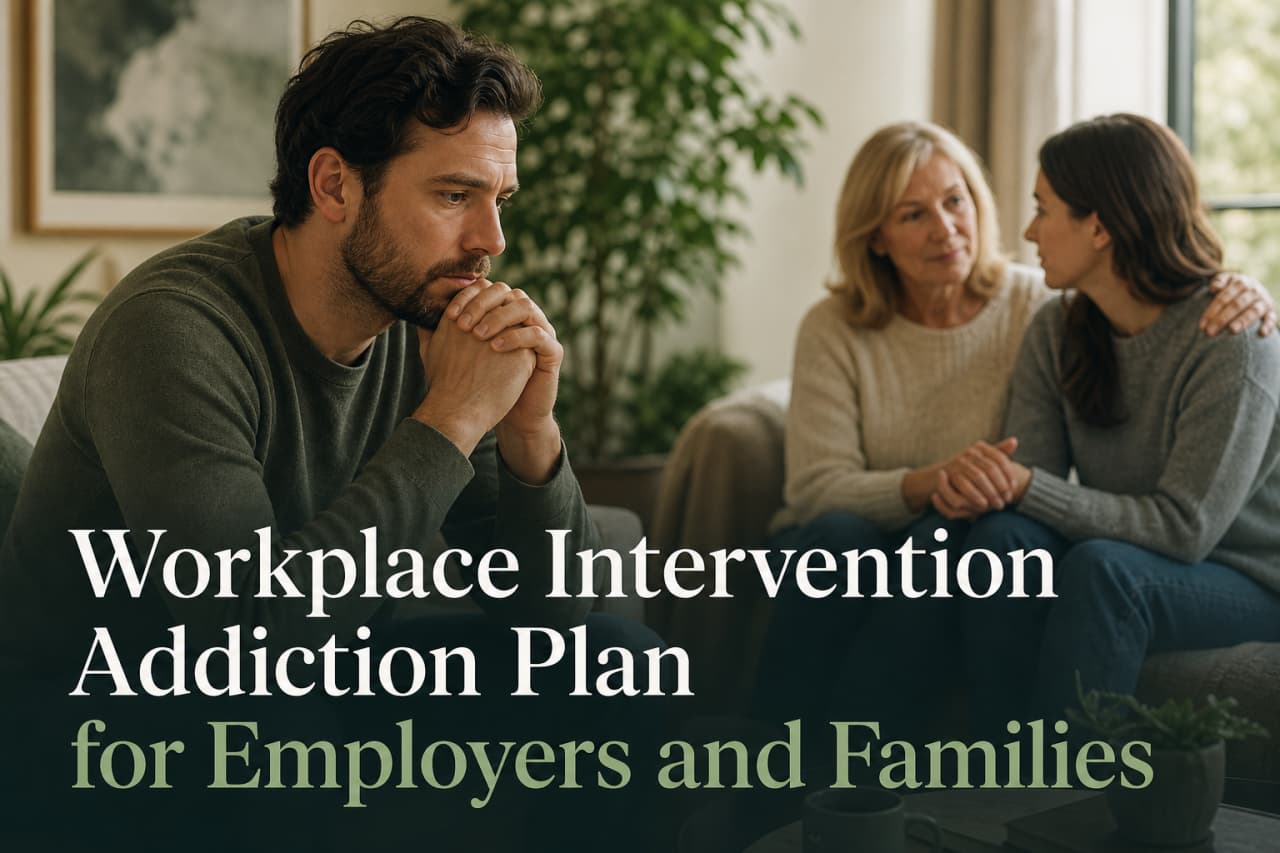
An HR-aware plan keeps job performance, family concerns, safety, privacy, and treatment planning in separate lanes during an employee intervention.
Documented absences and safety incidents put managers in a bind they rarely train for. HR should document observed conduct, keep medical details restricted, and leave treatment planning to qualified professionals. A workplace intervention addiction plan works best when employment duties and family concerns stay in separate lanes. That structure cuts needless disclosure. It also gives the employee a direct, respectful path toward assessment and care.
Employers, families, and interventionists hold different jobs. Performance, safety, policy, and workplace resources sit with the employer. Relatives share concerns from home and decide which personal boundaries they can hold. Planning the treatment conversation and coordinating clinical next steps falls to the interventionist.
Managers should stick to facts they can observe. Missed shifts, unexplained absences, unsafe conduct, declining work quality, and policy violations belong in an employment discussion. Assigning a diagnosis has no place there. Managers should not ask relatives to prove that an employee has a substance use disorder.
At Addiction Interventions, based at 3822 Campus Dr #300-B in Newport Beach, every plan is built around the family, the employee, the workplace structure, and the safety concerns on the table. A small family business needs a different privacy path than a large employer with HR staff, legal counsel, and a formal employee assistance program.
Keep employment facts, family history, and treatment planning in separate lanes.
Use the smallest practical circle of communication. One HR representative can gather workplace facts, review policy with counsel, and act as the employer contact. Family members should send personal history straight to the interventionist rather than circulating it among managers.
The EEOC's guidance on employee medical information explains that medical information obtained through disability-related inquiries or medical examinations generally must remain confidential and separate from personnel records, subject to limited exceptions. State law, union agreements, and the facts of the case may create further duties. Employers should have qualified counsel review the plan.
Addiction Interventions has a nationwide network of certified interventionists who travel across all 50 states. We can hold interventions in a home or facility, which often keeps the treatment conversation away from coworkers and routine workplace traffic.
Fewer people need the file.
Employers should prepare an employment message, not a clinical argument. The message can state the conduct that caused concern, the applicable policy, available workplace resources, and what must happen next regarding the employee's job. HR or counsel should approve that language before anyone speaks.
Online symptom lists can educate, but they cannot establish an employee's diagnosis. Mayo Clinic's substance use signs overview and the National Institute on Alcohol Abuse and Alcoholism's alcohol use disorder resource are useful starting points for families. Clinical assessment belongs with qualified care professionals.
A manager might say that the employee missed three scheduled shifts and must discuss attendance policy with HR. The manager should avoid declaring that alcohol or drug use caused those absences without reliable, lawful grounds. Specific facts are harder to dispute. They are also less likely to expose private family information.
Our family preparation phase includes coaching on what to say, what to expect, and how to hold firm boundaries without turning the meeting into an argument. If an employer will participate, its role should be written down before the intervention. The interventionist and employer counsel handle separate parts of that preparation.
An interventionist provides intervention planning and treatment coordination. Employers should rely on qualified HR and legal counsel for employment decisions, leave requirements, disability questions, testing rules, and disciplinary action.
Families should give the interventionist the personal history a supervisor does not need. That history may include changes at home, prior treatment, mental health concerns, access to money, family conflict, and earlier attempts to discuss care. Those details help shape the intervention while staying outside the personnel process.
Family boundaries also belong outside employment decisions. A spouse might change access to shared funds or set conditions for remaining in the home. A parent may stop paying debts tied to substance use. The family should not promise job protection, speak for the employer, or use workplace discipline as a private threat.
Jennifer Miela-McDaniel, our Clinical Director and Lead Interventionist, began working as a drug and alcohol counselor in 1993. She is a trauma specialist trained in five intervention models, including the invitational and non-confrontational ARISE approach. Her work treats the intervention as a chance to interrupt destructive patterns across the family system.
Families can also review SAMHSA's national treatment information for general education. A professional intervention plan goes further by matching the conversation, timing, travel, and placement work to the actual crisis.
Workplace pressure cannot replace family preparation.
Our process has four phases. The employer may have a limited role in only one or two of them. Keeping that role narrow protects privacy and lets each party speak from its actual authority.
Treatment options should be identified before the meeting whenever circumstances allow. Waiting until the employee agrees can create delays, especially if the right program must address both substance use and a mental health condition such as depression, anxiety, or PTSD.
Intervention fees, treatment charges, admissions, and insurance coverage are separate questions. We explain intervention costs without inventing a fixed price, then discuss placement and admissions based on the person's needs. Insurance coverage depends on the plan, provider, service, and other policy terms. No outcome can be guaranteed.
A senior title changes the logistics. The same expectations for safety and respect still apply. Executives may control budgets, supervise the people raising concerns, travel often, or hold a visible public role. Those conditions call for tighter communication and a clear chain of authority.
An executive intervention plan may use one HR contact, an off-site setting, limited scheduling details, and a treatment option prepared around professional obligations. The board, security staff, legal counsel, or business partners should take part only when their authority or information is needed.
Addiction Interventions provides discreet executive interventions across the country. Callers speak directly with our co-founders rather than a centralized call center. David Allen Gates, our Lead Interventionist, is a Certified Intervention Professional and Internationally Certified Alcohol and Drug Counselor with over 20 years of experience directing nationally recognized treatment programs.
David has personally led over 1,500 interventions and is trained in the ARISE method, Johnson Model, and Family Systems Intervention. His long-term recovery also gives him a personal view of the fear, resistance, and hope that can enter the room.
Discretion starts before the meeting.
A planned intervention cannot replace emergency response. Call 911 if there is an overdose, medical emergency, immediate danger, or threat of violence. Call or text 988 for a suicidal or mental health crisis that needs immediate crisis support.
Don't ask an impaired employee to drive. Don't attempt a workplace confrontation during an active medical or safety emergency. Move people away from danger and use emergency services first.
Withdrawal risk also needs medical assessment. An employer or family member should not direct a person to stop alcohol or other substances abruptly during a workplace meeting. A qualified medical team should determine the appropriate level of care.
Addiction Interventions is available 24/7 for families in crisis. We provide crisis interventions, mental health interventions, and dual diagnosis interventions when substance use and mental health concerns appear together. Our role begins after immediate danger has been addressed, or alongside emergency professionals when coordination is appropriate.
Our 24/7 team helps families separate intervention planning from decisions that belong with HR, legal counsel, emergency services, or treatment providers.
The answer depends on applicable law, company policy, the employee's role, any union agreement, and the documented facts. An interventionist should not make that employment decision. HR and qualified counsel should determine what the employer may require and how to communicate it.
A private off-site setting is usually the better choice when the employee can leave work safely. It limits coworker exposure and separates treatment from discipline. Addiction Interventions can lead in-home and facility-based interventions, and our specialists travel nationwide.
Our initial family consultation is completely free and 100 percent confidential. Workplace records and employer communications follow different rules. HR and counsel should decide what the company records, where it is stored, and who may receive it.
The employer returns to its lawful policies and documented performance expectations, while the family maintains the boundaries prepared before the meeting. Our ongoing support can help the family respond without making improvised promises or threats.
Coverage depends on the insurance plan and the service being billed. Intervention services and treatment admission may be handled differently. Our team can explain costs and placement options, but the insurer must confirm coverage and any member responsibility.
Addiction Interventions is available 24/7 and serves all 50 states. Timing depends on safety, location, family preparation, specialist travel, and suitable treatment availability. We will not promise a schedule before reviewing those facts.
Call Addiction Interventions at 949-776-7093 for a completely free and 100 percent confidential consultation. You will speak directly with our co-founders rather than a call center. We can help your family decide how HR should fit into the plan, what information should remain private, and which next steps are realistic.
Our headquarters is at 3822 Campus Dr #300-B, Newport Beach, CA 92660, and our interventionists travel nationwide.
About the Author

David Allen Gates is a Certified Intervention Professional (CIP) and founder of Addiction Interventions. He has personally led more than 1,500 family interventions nationwide.
Full bioIn This Article
Related Services
Tags
Ready to help your loved one?
Call NowUse a discreet logistics checklist to plan an executive intervention around privacy, travel, treatment entry, and career risk.

A Florida office does not prove intervention quality. Check credentials, planning, travel terms, and follow-through before you hire a traveling professional.

Distance is one factor. Compare travel readiness, credentials, family preparation, treatment coordination, and follow-through before hiring.

Check credentials, referral ties, contracts, safety plans, and follow-through before hiring a professional intervention provider.

A certified intervention professional brings focused training. Families still need to verify experience, methods, ethics, and crisis planning before they hire.

Self-medication turns into a family crisis when use escalates and safety slips. A professional intervention can push care forward before the next emergency.
If this article resonated with your situation, a certified interventionist can help you understand your options — confidentially, with no pressure and no cost for the first call.