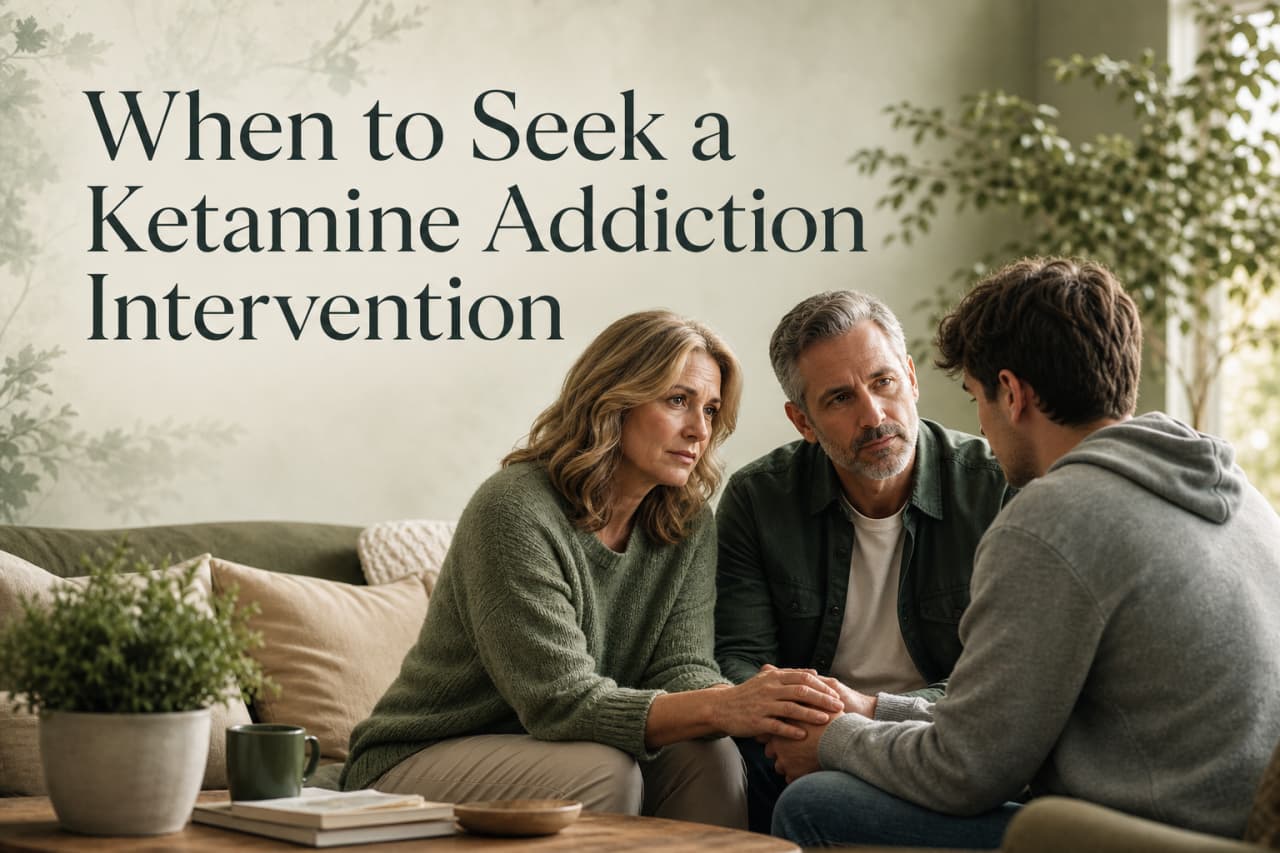
Ketamine can cause dissociation, confusion, and reduced awareness, so a family may face real danger before the pattern resembles a familiar substance use disorder. A ketamine addiction intervention is appropriate when use is escalating, daily life is breaking down, or the person refuses an assessment while the risk keeps growing.
Ketamine is a dissociative anesthetic with legitimate medical uses. The Mayo Clinic overview of intravenous ketamine describes its supervised medical administration. The National Institute on Drug Abuse overview of hallucinogens and dissociative drugs explains how dissociative drugs can distort perception and produce feelings of detachment.
Why Ketamine Misuse Can Hide in Plain Sight
Medical use can give a risky pattern an explanation that sounds reasonable. A person may point to legitimate ketamine treatment while taking it outside the agreed plan, obtaining it from another source, or continuing despite clear harm. A prescription label alone doesn’t establish that current use is safe.
Frequency can mislead families too. For example, intermittent use may still lead to impaired driving, missed work, unsafe combinations with other substances, or days of confusion. Daily use isn’t required before a family can respond.
Focus on changes you can observe. Track where the ketamine comes from, how often it’s used, signs of intoxication, requests for money, physical complaints, and what happens afterward. Repeated memory gaps, detached behavior, secrecy, or failed attempts to reduce use deserve attention.
At Addiction Interventions, every plan is customized because ketamine misuse can sit beside depression, anxiety, trauma, or use of other substances. Our certified interventionists assess the full pattern before recommending a family meeting.
Patterns matter more than explanations.
When a Ketamine Addiction Intervention Fits
A professional intervention fits when the family sees recurring harm and private conversations keep failing. You don’t need to prove a diagnosis first. An interventionist can help you separate suspicion from observable facts and decide if a structured meeting is warranted.
Common decision points include taking ketamine outside medical direction, obtaining nonmedical supplies, driving after use, combining it with alcohol or sedating drugs, missing obligations, or borrowing money without a clear explanation. Continued use after health, relationship, work, or financial consequences raises the concern further.
New physical or psychiatric symptoms need clinical attention. Persistent urinary symptoms, severe confusion, unusual agitation, or marked changes in awareness shouldn’t be treated as proof of addiction, but they do give the family a reason to seek medical assessment.
Call 911 if the person can’t be awakened, has trouble breathing, experiences a seizure, shows violent confusion, or presents an immediate danger to self or others. An intervention isn’t a substitute for emergency care.
For emotional distress, suicidal thoughts, or crisis support, call or text 988. SAMHSA explains the service through its 988 Suicide & Crisis Lifeline resource. If alcohol may also be involved, review the warning signs in NIAAA’s alcohol overdose guidance and call 911 when those signs appear.
Once immediate danger has passed, our team is available 24/7 to discuss the next move. Your consultation is completely free and 100 percent confidential. You’ll speak directly with one of our co-founders instead of a centralized call center.
What Families Should Do Before the Intervention
Write down facts before confronting the person. Dates, missed obligations, medical events, unsafe driving, unexplained spending, and changes in behavior give an interventionist useful material. Labels and arguments about character don’t.
For example, ‘You missed two shifts after using and asked me for money the next morning’ gives the person a concrete event to address. ‘You’re ruining everything’ invites a debate with no clear endpoint.
Money is data. Repeated cash requests, missing funds, unexplained charges, or sudden borrowing may show that ketamine use is affecting judgment and priorities. Family members should also note which consequences they’ve been paying for or hiding.
Set boundaries you can carry out. Those boundaries may cover cash, housing, transportation, or contact during intoxication. A consequence that the family won’t maintain gives the person another reason to dismiss the conversation.
Don’t hold the main discussion while the person appears intoxicated or highly agitated. If there’s a history of violence, access to weapons, or threats of self-harm, tell the interventionist before anyone gathers. That information can change the setting and timing.
Our family preparation phase covers exactly what to say, what to expect, and how to hold firm boundaries without shaming the person. The interventionist also helps the family plan for treatment acceptance, refusal, or an unexpected interruption.
Preparation changes the conversation.
How Our Ketamine Intervention Process Works
The work begins before anyone sits down together. Addiction Interventions uses four phases to give the family a clear plan and keep treatment placement from becoming a last-minute search.
- 1Free confidential call. We listen to what has happened, identify immediate safety concerns, and explain your options without requiring a commitment.
- 2Family preparation. Your interventionist reviews the history, helps participants prepare what they’ll say, and establishes boundaries the family can maintain.
- 3The intervention. A certified specialist leads a calm, structured conversation focused on treatment and the effects of continued ketamine use.
- 4Ongoing support. We coordinate treatment placement and stay involved during treatment and beyond rather than ending our work when the meeting closes.
Our network of certified interventionists travels throughout all 50 states for in-home and facility-based interventions. Addiction Interventions is a Joint Commission Accredited family and crisis intervention company headquartered in Newport Beach, California.
Lead Interventionist David Allen Gates is a Certified Intervention Professional and an Internationally Certified Alcohol and Drug Counselor. He has over 20 years of experience directing addiction treatment programs and has personally led over 1,500 interventions.
Clinical Director Jennifer Miela-McDaniel began working as a drug and alcohol counselor in 1993. She is a trauma specialist trained in five intervention models and has specific experience with drug, alcohol, mental health, adolescent, gambling, eating disorder, and geriatric interventions.
No interventionist can guarantee that a person will accept treatment. Professional structure improves the family’s ability to present one clear option, avoid conflicting messages, and follow through on the boundaries established before the meeting.
Choosing the Right Level of Response
Concerns about prescribed ketamine should begin with the treating clinician. Share the changes you’ve observed and ask for guidance. Don’t change another person’s dose, dispose of medication, or attempt to manage withdrawal without medical direction.
A planned intervention becomes the stronger option when the person rejects assessment, repeatedly breaks the treatment plan, obtains ketamine elsewhere, or continues unsafe behavior. Our interventionists can lead the meeting at home or in a facility, depending on the case.
Mental health symptoms can alter the recommendation. Addiction Interventions provides mental health and dual diagnosis interventions for people who may need coordinated support for substance use and conditions such as depression, anxiety, or PTSD.
An active medical or safety emergency still calls for 911. A suicidal or emotional crisis calls for 988, with 911 used when there’s immediate danger. The planned intervention can follow after professionals address the immediate risk.
Match the response to the risk.
What People Want to Know
Can prescribed ketamine use become misuse?
Yes. Use becomes concerning when a person takes ketamine outside medical directions, seeks other sources, uses it in unsafe settings, or continues despite clear consequences. The prescribing clinician should assess medication concerns.
What if the person refuses treatment?
A planned intervention can still proceed when treatment refusal is part of the pattern. The family prepares one clear treatment option and decides beforehand which boundaries will take effect if the person declines.
Should we stage the intervention ourselves?
Families should seek professional guidance when ketamine use involves serious medical risk, mental health symptoms, threats, aggression, or repeated treatment refusal. A certified interventionist can assess safety, prepare each participant, and keep the meeting focused.
How much does a ketamine intervention cost?
Families receive the service scope and fee before deciding. Each intervention plan is customized, so our team first gathers details during a completely free and 100 percent confidential consultation. We don’t publish or promise a universal price.
Can Addiction Interventions travel to our family?
Yes. Our certified interventionists serve families across all 50 states and travel for in-home or facility-based interventions. We’re available 24/7, though travel timing depends on the situation and specialist availability.
Does an intervention end after the meeting?
No. Our fourth phase includes treatment placement coordination and follow-through during treatment and beyond. The family receives continued guidance as boundaries and roles begin to change.
Speak Directly With Our Team
Call Addiction Interventions at 949-776-7093 for a completely free and 100 percent confidential consultation. You’re guaranteed to speak directly with one of our co-founders. We’re available 24/7 and serve families nationwide from our headquarters at 3822 Campus Dr #300-B, Newport Beach, CA 92660.