
Intervention
September 24, 20267 min read
Siblings in Intervention: Who Belongs in the Room
Use this include-or-exclude grid to decide which siblings should attend, help behind the scenes, or step back from an intervention.
DGC
David Gates, CIPUse calm, specific scripts to address denial, set boundaries, and decide when your family should involve an interventionist.
David Gates, CIP
Lead Interventionist

Use calm, specific scripts to address denial, set boundaries, and decide when your family should involve an interventionist.
Arguments over labels give the other person a side issue to fight about. If you searched “how to talk to addict in denial,” start with one behavior you saw, the effect it had, and one clear next step. Skip the fact-check war. State your boundary, then stop talking.
We use person-first language such as “person with a substance use disorder.” The word “addict” can turn a talk about behavior into a fight over identity. You also do not need a full admission of addiction before you ask for an assessment, a treatment consult, or other professional help.
Pick a private window when the person can actually follow what you say. Keep children and uninvolved relatives out of the room. Do not open this talk during active substance use, a heated fight, or the few minutes before someone has to leave for work.
If anyone is in immediate danger, call 911. For a suicide or mental health crisis, call or text 988 or use the [988 Suicide & Crisis Lifeline](https://988lifeline.org/). A family conversation can wait.
Prepare one or two observations before you speak. The Mayo Clinic overview of drug addiction describes changes that can hit responsibilities, relationships, health, and daily behavior. Name only what you personally saw or heard. Secondhand claims invite a fight about the source.
Addiction Interventions is available 24/7 if you need help deciding whether the moment is safe and productive. The initial consultation is free and 100 percent confidential.
Safety comes first.
Build each statement from four parts: an observation, its effect, a direct request, and a boundary you control. That structure keeps you off labels, amateur diagnoses, and attacks on character.
State the observation first. Say, “You missed work twice this week after drinking,” not “You’re ruining everything.” Stick to details you know are accurate. Then explain the effect: “I’m concerned about your safety, and I can’t keep calling your employer for you.” Make one request next. “Will you speak with a treatment professional tomorrow?” lands better than “Please fix this.” Close with a boundary you can hold. “I won’t provide cash, but I will help arrange an assessment.”
Pause after the request. Families often keep talking because silence feels awkward, yet every extra explanation hands the other person another point to dispute. Let them answer. If their voice rises, lower yours and repeat the request once.
“I care about you. I’ve seen a specific change, and I’m asking you to speak with a professional. I won’t argue about labels.”
The wording should fit the person, the substance use pattern, any mental health concerns, and your family history. Addiction Interventions builds a plan for each family instead of handing everyone the same speech. Our team has helped over 1,500 families prepare for these conversations and formal interventions.
Answer the objection once, then return to your observation and request. You want a decision about the next step. Winning a debate about the past rarely produces that decision.
If they say, “I can stop whenever I want,” try: “I hope you can. Because previous attempts haven’t lasted, I’m asking you to speak with a professional.” Use the second sentence only if it’s true.
If they say, “Everyone drinks,” try: “I’m talking about what happened here. You missed work and drove after drinking. I’m asking you to complete an assessment.” Swap in facts you personally observed.
If they say, “You’re exaggerating,” try: “We may see this differently. I won’t argue about that tonight. My request is that you speak with a professional.”
If they say, “You caused this,” try: “I’m willing to discuss my part with a counselor. Today, I’m asking you to address the substance use I’ve observed.” Owning your behavior does not mean owning someone else’s choices.
If they say, “Leave me alone,” try: “I’ll end this conversation for tonight. My boundary remains the same, and I’m willing to discuss professional help tomorrow.” Then leave the room if doing so is safe.
Keep it short.
Families can review treatment resources through SAMHSA’s National Helpline. For alcohol-related concerns, the National Institute on Alcohol Abuse and Alcoholism explains treatment types and questions to ask providers.
During family preparation, our interventionists coach relatives on exact wording, likely responses, and where the conversation should end. Preparation also stops several relatives from sending mixed messages.
Choose a limit based on what you will do. A threat tries to force an immediate response. A boundary states which behavior you will stop joining, even if the person rejects help.
Examples that hold up under pressure include: “I won’t give you cash. I can pay an approved provider directly.” “I won’t call your employer or make excuses for missed work.” “You can’t use my car when I believe you’re impaired.” “I will help schedule an assessment and provide transportation if the plan is safe.”
Don’t announce a consequence you can’t maintain. Walking it back after a fight teaches everyone that enough pressure erases the limit. Align with the other participating relatives on money, housing, childcare, and transportation before the conversation starts.
Boundaries also force family members to look at their own patterns. Addiction Interventions works with the whole family because recovery stalls when relatives keep supplying money, excuses, or cover from every consequence. Our family preparation phase gives each participant a defined role.
Write each boundary in one sentence. If it takes a paragraph to explain, the limit may be too vague to follow.
Consistency beats volume.
Bring in a professional when calm talks keep ending in the same refusal, safety concerns are rising, or relatives cannot agree on boundaries. Co-occurring depression, anxiety, PTSD, or other mental health concerns also call for careful planning.
A professional intervention follows a planned process. At Addiction Interventions, the work has four phases.
First, a free confidential call gives your family time to describe the substance use, mental health concerns, current risks, and earlier attempts to help. Next, family preparation covers wording, participants, boundaries, treatment options, and likely responses before anyone sits down together. Then a certified specialist leads a structured conversation meant to open the door to treatment without turning the meeting into a shouting match. After that, ongoing support covers treatment placement coordination and follow-through during treatment and beyond.
Lead Interventionist David Allen Gates is a Certified Intervention Professional and Internationally Certified Alcohol and Drug Counselor. He has over 20 years of experience directing addiction treatment programs and has personally led over 1,500 interventions. His training includes ARISE, the Johnson Model, and Family Systems Intervention.
Clinical Director and Lead Interventionist Jennifer Miela-McDaniel began working as a drug and alcohol counselor in 1993. She is a trauma specialist trained in five intervention models, including the invitational and non-confrontational ARISE approach.
Our certified interventionists travel throughout all 50 states for in-home and facility-based interventions. The plan may address alcohol use, drug use, a mental health crisis, or co-occurring conditions that need integrated treatment.
Our co-founders answer consultation calls directly rather than routing families through a centralized call center. The team is available 24/7 at 949-776-7093.
No. Use the person’s name or say “person with a substance use disorder.” Focus on observed behavior and the help you’re requesting. A label can spark a separate argument that has nothing to do with accepting care.
Wait for a time when they appear able to follow and remember the conversation. Don’t force a serious discussion during active use or an explosive argument. Call 911 if anyone is in immediate danger.
There is no fixed number. Look at the pattern rather than counting conversations. Repeated refusal, rising risk, broken boundaries, and worsening family conflict are reasons to speak with an intervention professional.
Address immediate safety before discussing treatment. Call or text 988 for a suicide or mental health crisis, and call 911 for immediate danger. Addiction Interventions also plans dual diagnosis interventions when mental health and substance use concerns occur together.
Coverage depends on the insurance plan and the service being billed. Ask the insurer separately about intervention services, assessment, transportation, and treatment. Don’t assume that coverage for treatment includes the intervention fee. Our free consultation can explain the service structure without promising coverage.
End the conversation calmly and follow the boundaries you stated. Don’t restart the same argument every hour. A professional can review what happened, revise the plan, and help your family decide whether a structured intervention is appropriate.
Call Addiction Interventions at 949-776-7093 for a free and 100 percent confidential consultation. You’ll speak directly with one of our co-founders about the current risks, previous conversations, family boundaries, and possible next steps.
Addiction Interventions is Joint Commission Accredited and headquartered at 3822 Campus Dr #300-B, Newport Beach, CA 92660. Our interventionists travel nationwide and can meet families at home or in a facility.
Bring two or three written examples of what has changed and a list of the boundaries your family has tried. That gives the consultation a clear starting point.
About the Author

David Allen Gates is a Certified Intervention Professional (CIP) and founder of Addiction Interventions. He has personally led more than 1,500 family interventions nationwide.
Full bioIn This Article
Related Services
Tags
Ready to help your loved one?
Call NowUse this include-or-exclude grid to decide which siblings should attend, help behind the scenes, or step back from an intervention.
Your family doesn't have to keep collapsing while a loved one denies the problem. Set limits, protect safety, and seek support before the next crisis.

Promises, monitoring, rescues, and brief calm can make delay feel rational. Families often need a professional assessment once those patterns repeat.
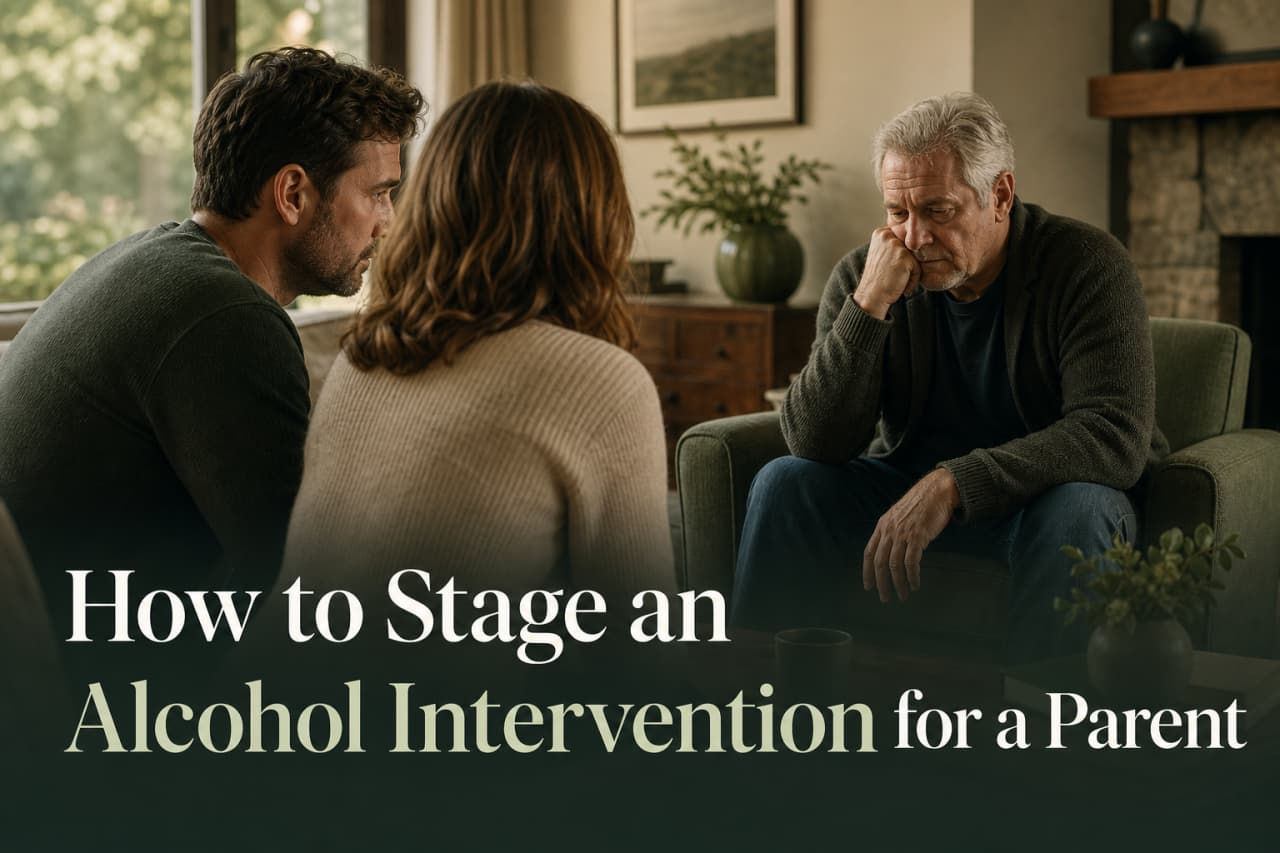
A plan for adult children preparing an alcohol intervention, including family roles, letters, treatment options, boundaries, and refusal.
A person may reconsider treatment after an intervention. Settle admission, travel, payment, clinical fit, and safety details before the meeting.

Use a practical risk matrix to judge when a family-led intervention may escalate danger, weaken boundaries, or delay treatment.




If this article resonated with your situation, a certified interventionist can help you understand your options — confidentially, with no pressure and no cost for the first call.